
Adaptive Cruise Control Calibration in Bloomington, MN: What Your Shop Needs to Document Every Time
Bloomington, United States - February 5, 2026 / Minnesota ADAS Solutions /
Bloomington, MN – Minnesota ADAS Solutions provides expert adaptive cruise control (ACC) calibration in Bloomington, MN, helping drivers maintain safe and reliable vehicle performance. Adaptive cruise control is a modern driver-assistance technology that automatically adjusts vehicle speed to keep a safe distance from traffic ahead. This system relies on radar, camera sensors, and a vehicle control module to monitor road conditions and manage acceleration and braking automatically. By offering professional ACC services, the facility makes sure that vehicles operate correctly after repairs or adjustments, while offering comprehensive records for service verification.

What is Adaptive Cruise Control?
Adaptive cruise control is a safety feature designed to maintain speed and spacing between vehicles. The adaptive cruise control system uses radar and cameras to detect surrounding traffic and obstacles. When traffic slows, the system reduces speed; when the road clears, it accelerates back to the preset speed. This technology helps reduce fatigue during long drives and improves highway safety by keeping vehicles at consistent distances. Minnesota ADAS Solutions provides adaptive cruise control calibration and repair to make sure that these systems perform as intended for drivers in Bloomington and surrounding areas.
Key Components of an Adaptive Cruise Control System
Adaptive cruise control relies on three main components:
- Radar Sensors: Radar sensors detect the speed and distance of vehicles ahead, providing data for safe acceleration and braking adjustments.
- Cameras: Cameras track lane markings, traffic signs, and obstacles, supporting accurate vehicle control and collision avoidance.
- Vehicle Control Module: The vehicle control module interprets data from sensors and cameras to manage the throttle, braking, and acceleration automatically.
Adaptive Cruise Control Benefits
Adaptive cruise control provides multiple benefits for drivers, including:
- Maintaining a Safe Following Distance: The system keeps a consistent gap between vehicles, reducing the risk of rear-end collisions.
- Reducing Driver Stress: By handling speed adjustments automatically, ACC lets drivers focus on the road instead of constant throttle and brake input.
- Consistent Speed Control: ACC improves highway driving by maintaining steady speeds and smoother traffic flow.
- Supports Other Safety Functions: ACC works with lane-keeping assist and collision warnings to improve overall vehicle safety.
These adaptive cruise control benefits are fully realized when the system is calibrated correctly and operating efficiently.
Why Adaptive Cruise Control Calibration is Important
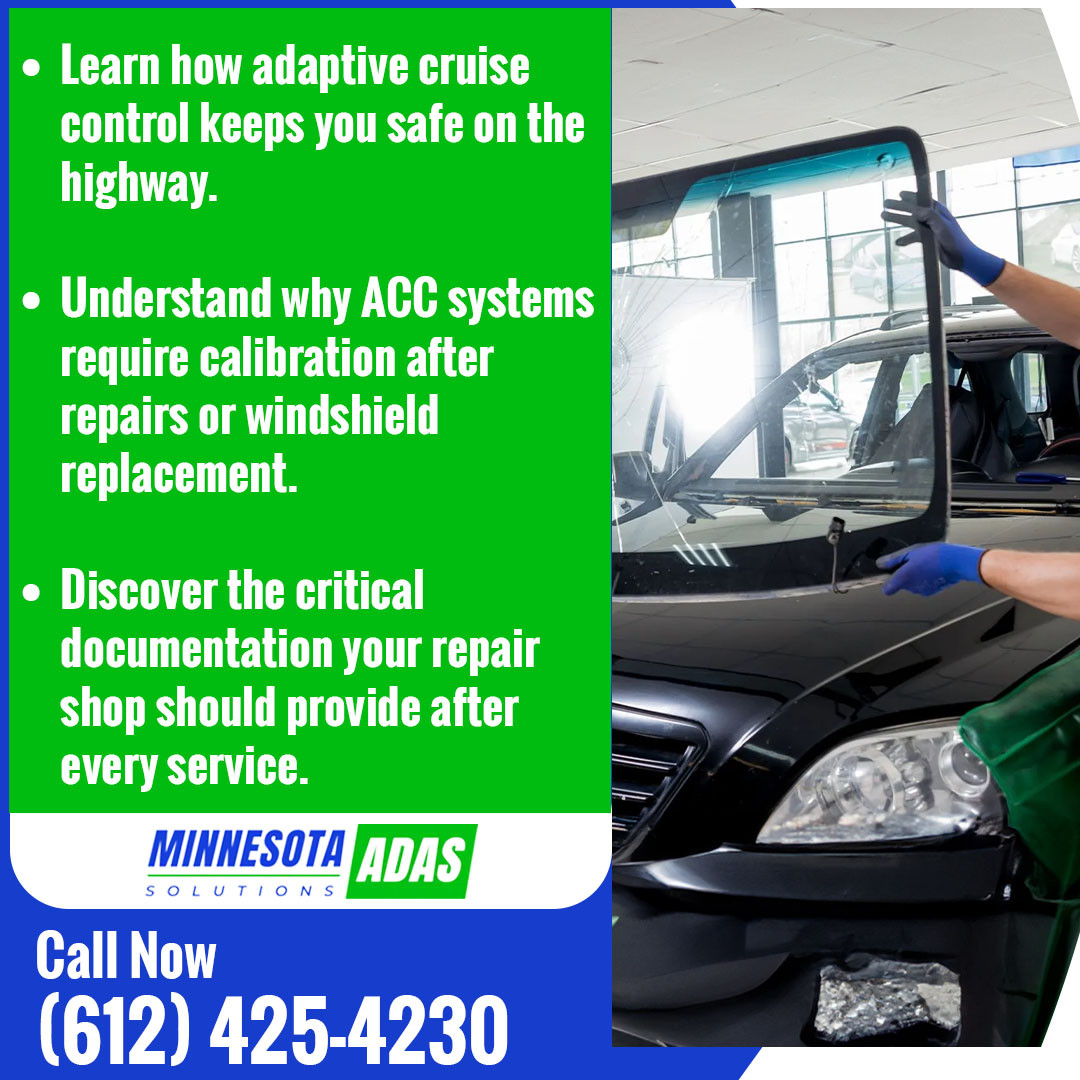
Adaptive cruise control calibration makes sure that sensors and cameras function properly after repairs, windshield replacements, or sensor adjustments. If calibration is not done, radar and cameras may misread distances, reducing system accuracy and increasing the risk of collisions. Calibration restores ACC performance, verifies sensor alignment, and allows drivers to rely on the system’s functionality.
Common Scenarios Requiring Calibration
Calibration is needed after:
- Windshield Replacement: Misaligned cameras can affect ACC performance.
- Front-End Collision Repairs: Repairs to bumpers, hoods, or sensor mounts can shift sensor positions.
- Sensor or Camera Adjustments: Any replacement or adjustment requires recalibration to maintain proper detection.
Consequences of Improper Calibration
Without proper calibration:
- Sensors may misread distances or react incorrectly.
- Dashboard alerts may indicate errors or malfunctions.
- The vehicle may not maintain safe following distances, increasing accident risk.
Documentation Requirements for ACC Calibration
Shops performing ACC calibration should document:
- Vehicle make, model, and year.
- Type of calibration performed.
- Technician name and certification.
- Tools and procedures used.
- Results of post-calibration testing.
Proper records help shops demonstrate professional procedures and provide evidence of completed work for insurance or future service needs.
Minnesota ADAS Solutions ACC Calibration Services
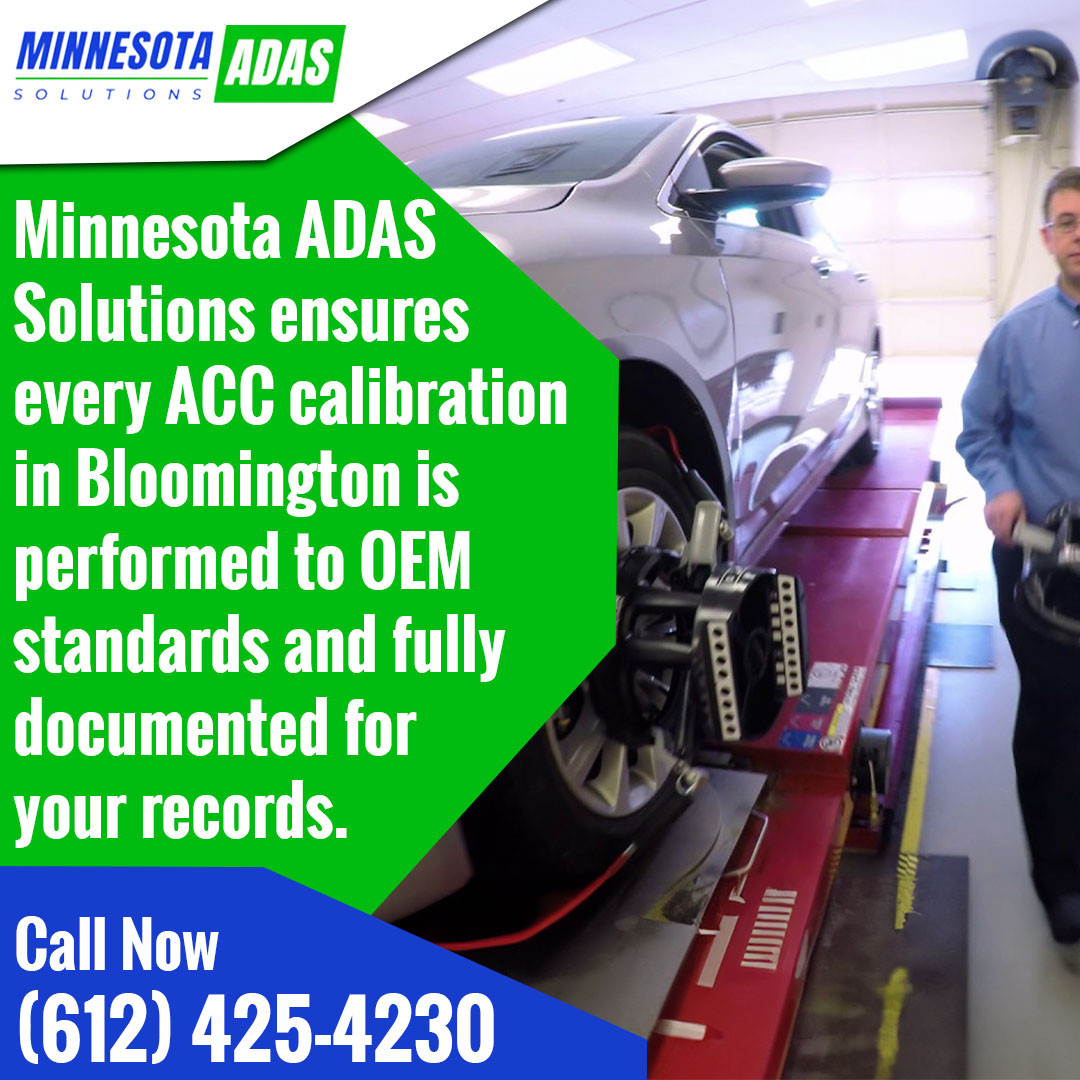
Minnesota ADAS Solutions offers reliable adaptive cruise control calibration in Bloomington, MN, using certified procedures. The process includes:
Diagnostics: Identifying sensor or system issues.
Repair or Replacement: Adjusting or replacing radar sensors and cameras.
Calibration to OEM Standards: Restoring system accuracy to manufacturer specifications.
Verification: Testing ACC performance under controlled conditions.
The company’s certified technicians and controlled facility provide accurate ACC repair, minimizing downtime while keeping detailed records of every calibration.

Schedule Your Adaptive Cruise Control Service
For drivers seeking adaptive cruise control repair near them, Minnesota ADAS Solutions provides ACC calibration, repair, and documentation for all vehicle makes and models. Contact the Bloomington, MN, facility today at (612) 425-4230 or email info@mnadas.com to schedule a service and ensure your vehicle’s ACC system works reliably.

Contact Information:
Minnesota ADAS Solutions
9555 James Ave S
Bloomington, MN 55431
United States
CJ Peeters
(612) 425-4230
https://www.mnadas.com/
Original Source: https://www.mnadas.com/adas/adaptive-cruise-control-calibration-in-bloomington-mn-what-your-shop-needs-to-document-every-time/
