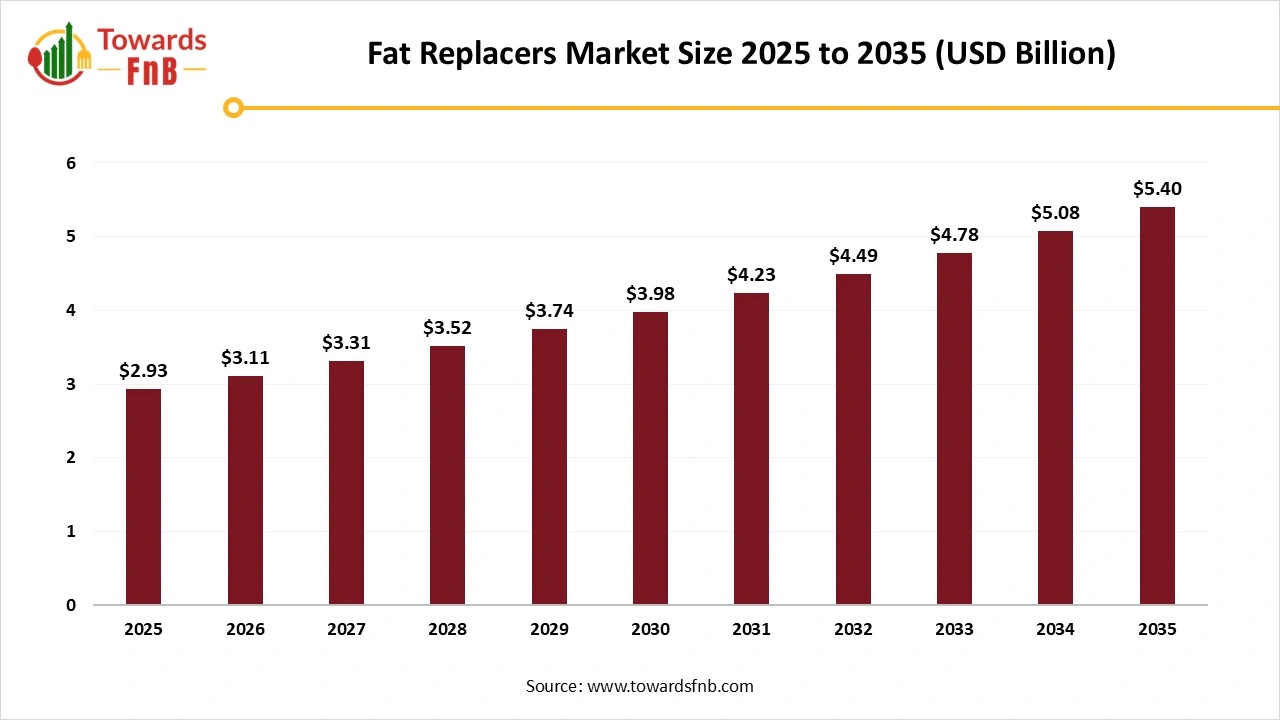
Ottawa, Jan. 12, 2026 (GLOBE NEWSWIRE) -- The global fat replacers market size stood at USD 2.93 billion in 2025 and is predicted to grow from USD 3.11 billion in 2026 to reach around USD 5.40 billion by 2035. A report published by Towards FnB, a sister firm of Precedence Research, highlights that the market is expanding due to a growing population of health-conscious consumers fueling demand for low-calorie and low-fat options.
The market is observed to grow due to the growing population of health-conscious consumers, fueling the demand for low-calorie and low-fat options. Growing lifestyle diseases and obesity, impacting health adversely, are another major factor for the growth of the market.
Note: This report is readily available for immediate delivery. We can review it with you in a meeting to ensure data reliability and quality for decision-making.
Access the Full Study Instantly | Download Sample Pages of the Report Now@ https://www.towardsfnb.com/download-sample/5971
Key Highlights of the Fat Replacers Market
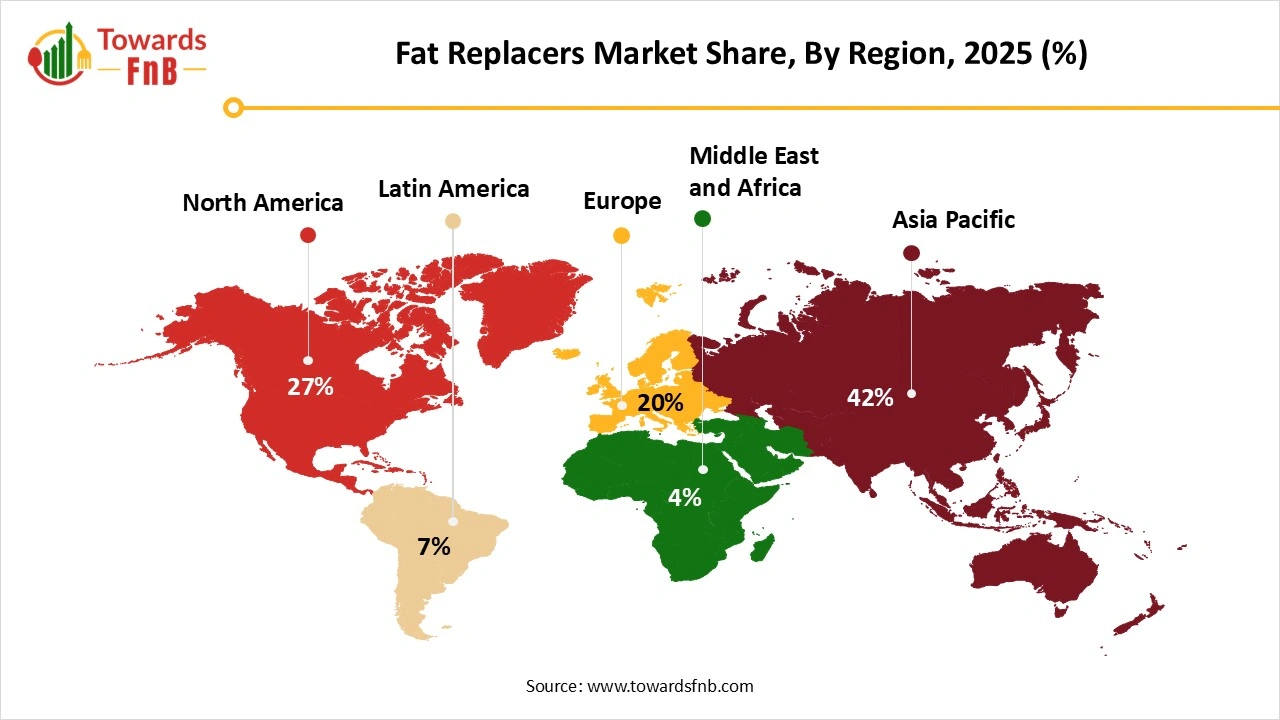
- By region, the Asia Pacific led the fat replacers market with highest share of 42% in 2025.
- By region, North America is expected to be the fastest-growing region in the foreseeable period.
- By region, Europe is observed to have a notable growth in the foreseen period.
- By product, the carbohydrate-based segment led the fat replacers market in 2025.
- By product, the protein-based segment is observed to grow in the foreseen period.
- By application, the bakery and confectionery segment led the fat replacers market in 2025.
- By application, the processed meat segment is expected to grow in the foreseen period.
“Fat replacers are transitioning from niche formulation tools to core components of large-scale food reformulation strategies,” said Vidyesh Swar, Principal Consultant at Towards FnB. “Manufacturers are increasingly prioritizing fat reduction without compromising sensory performance, and this is driving sustained demand across multiple food segments.”
Growing Health-Consciousness Aiding the Growth of Fat Replacers Industry
The fat replacers market is expected to grow due to a growing health-conscious population and growing lifestyle-related health disorders. The growing health and wellness trends are leading consumers to demand healthier versions of every edible item, leading to the growth of the fat replacers market. The market also observes growth due to the growth of lifestyle-related health issues such as obesity, diabetes, and cardiovascular issues. It majorly happens due to improper food and lifestyle habits caused by a hectic schedule.
The fat replacers market focuses on options that are low-calorie and low-fat, mimicking the taste, texture, and mouthfeel of fat, which is helpful to attract more consumers to a healthier lifestyle. Technological advancements help companies in the manufacturing of products that are healthy and fortified, along with no compromise in taste and texture, which is helpful for consumers to stay consistent in their fitness journey.
Technological Advancements Fueling the Growth of Fat Replacers Market
Technologically advanced extraction methods, emulsion stabilization, and fat simulation are essential for the growth of the fat replacers market. Cutting-edge processing methods, such as enzyme applications and membrane filtering, help to enhance the features of plant oils, helping to align their taste and texture with those of animal fats. Technological features such as AI and ML are helpful to fuel the formulation optimization, lower R&D expenses, and decrease time-to-market. Such features also help to enhance product quality and ensure guaranteed results to consumers using the product with the intention of fat loss.
Impact of AI on the Fat Replacers Market
Artificial intelligence is being increasingly applied in the fat replacers market to improve formulation accuracy, sensory performance, and processing stability across bakery, dairy, confectionery, and ready-to-eat food applications. Machine learning models are used to analyze large datasets covering lipid functionality, water-binding behavior, mouthfeel attributes, and thermal stability to design fat replacer systems that closely replicate the lubricity and flavor release of conventional fats while meeting reduced-fat or clean-label targets. In product development, AI accelerates screening of carbohydrate-based, protein-based, and lipid-structured replacers by predicting their interaction with starch matrices, emulsions, and protein networks, reducing reliance on extended pilot trials. During scale-up, AI-driven process optimization tools monitor parameters such as shear stress, particle size distribution, and emulsion stability to ensure consistent texture and shelf-life performance across high-throughput manufacturing lines.
AI is also deployed in sensory prediction, where trained models correlate instrumental data with human panel feedback to forecast creaminess, melt behavior, and aftertaste risks before commercial launch. From a regulatory and safety standpoint, AI supports ingredient compliance assessment and risk screening by mapping formulation inputs against safety thresholds and labeling requirements aligned with guidance from the Food and Agriculture Organization and regulatory frameworks overseen by the U.S. Food and Drug Administration. Overall, AI functions as a formulation and risk-mitigation engine in the fat replacers market, enabling manufacturers to achieve fat reduction goals without compromising sensory quality, process efficiency, or regulatory compliance.
Recent Developments in the Fat Replacers Market
- In August 2025, Nourish Ingredients announced that its proprietary Mortierella alpine biomass (S11) has been granted Generally Recognized as Safe (GRAS) status by the FEMA Expert Panel. It signifies that the product is safe and nutritional to use as a flavoring in food.
- In October 2024, a UK deep tech startup, MicroLub, closed a £3.5M ($4.5M) funding round. The spinout company claims to replace fats and oils with its plant-based microgels.
New Trends of Fat Replacers Market
- Higher demand for plant-based fat options, such as avocado and coconut oil derivatives, by vegan and vegetarian consumers, is one of the major factors for the growth of the fat replacers market.
- Higher demand for natural ingredients over synthetic options is another major factor for the growth of the market.
- Replacers with similar taste, texture, and mouthfeel to fatty options also help to attract more consumers, fueling the growth of the fat replacers market.
- In-depth R&D is helpful to enhance the product acceptability and quality and also helps to fuel the growth of the market.
- Use of AI and biotechnology for precision fermentation is another major factor for the growth of the fat replacers market.
Fat Replacers Market Dynamics
What are the Growth Drivers of the Fat Replacers Market?
Growing occurrences of lifestyle-related health disorders are one of the major factors for the growth of the market. Growing diseases such as obesity, diabetes, and heart-related issues lead to higher demand for healthier choices. A growing population of consumers leading to higher demand for healthier options enriched with essential nutrients and organic and healthier versions further helps to fuel the growth of the market. Fat replacers with similar mouthfeel, taste, and texture to fatty substances also help to enhance the growth of the market. Higher demand for clean-label, healthier, and organic options also helps to propel the market’s growth.
Higher Costs of Ingredients and Machinery are hampering the market’s Growth
The higher costs of premium and advanced ingredients and machinery used for the manufacturing of fat replacers are one of the major restrictions in the growth of the market. Costs involved in appointing labor experienced in handling such advanced machinery are another obstruction in the growth of the market. High-tech machinery helpful for the manufacturing of premium and fortified options is also a major restraint in the growth of the fat replacers market.
Rising Health and Wellness Trends are helpful for the Growth of the Fat Replacers Market
The growing population of health and wellness-conscious consumers, leading to higher demand for healthier options, is one of the major factors for the growth of the market. Hence, such factors lead to higher demand for healthier, organic, plant-based, and vegan options. Consumers with a target to lose weight and maintain a healthy lifestyle also help to propel the market’s growth. Technological innovations helpful to mimic the taste, flavor, and texture of healthy fats also help to enhance the market’s growth.
View Full Market Intelligence@ https://www.towardsfnb.com/insights/fat-replacers-market
Product Survey of the Fat Replacers Market
| Product Category | Description or Function | Common Forms or Variants | Key Applications or User Segments | Representative Brands or Product Types |
| Carbohydrate-Based Fat Replacers | Mimic fat mouthfeel and bulk using complex carbohydrates and fibers | Maltodextrins, polydextrose, inulin, modified starches | Bakery manufacturers, dairy processors, snack producers | Carbohydrate-based fat mimetics |
| Protein-Based Fat Replacers | Provide creamy texture and lubrication through protein microstructures | Microparticulated whey protein, egg protein systems | Low-fat dairy producers, sauces and dressings manufacturers | Microparticulated protein fat replacers |
| Lipid-Based Fat Replacers | Replace conventional fats with structured or modified lipid systems | Medium-chain triglycerides, structured lipids, emulsified oils | Processed food manufacturers, nutrition-focused brands | Structured lipid fat replacers |
| Fiber-Based Fat Replacers | Improve mouthfeel while adding dietary fiber and reducing caloric density | Oat fiber, citrus fiber, cellulose derivatives | Bakery products, meat analogs, processed foods | Functional fiber fat replacers |
| Starch-Based Fat Replacers | Enhance viscosity and creaminess while lowering fat content | Modified food starches, resistant starches | Soups, sauces, ready meals | Starch-based texture systems |
| Hydrocolloid-Based Fat Replacers | Simulate fat texture through water binding and gel formation | Xanthan gum, guar gum, carrageenan blends | Dressings, dairy desserts, processed meats | Hydrocolloid texture systems |
| Emulsion-Based Fat Replacers | Deliver reduced-fat functionality via optimized oil-in-water emulsions | Fine emulsion systems, encapsulated oils | Spreads, mayonnaise, sauces | Reduced-fat emulsion systems |
| Clean-Label Fat Replacers | Fat replacement solutions designed with recognizable or minimally processed ingredients | Fermentation-derived fibers, native starch blends | Clean-label and premium food brands | Clean-label fat replacer formulations |
| Fat Replacers for Meat Alternatives | Provide juiciness and mouthfeel in plant-based and hybrid meat products | Fiber-protein-lipid composite systems | Plant-based meat manufacturers | Fat mimetic systems for meat alternatives |
| Fat Replacers for Dairy Alternatives | Replicate creaminess and fat perception in non-dairy formulations | Protein-starch and fiber-based blends | Plant-based dairy producers | Non-dairy fat replacement systems |
For Detailed Pricing and Tailored Market Report Options, Click Here: https://www.towardsfnb.com/checkout/5971
Fat Replacers Market Regional Analysis
Asia Pacific Dominated the Fat Replacers Market in 2025
Asia Pacific led the fat replacers market in 2025, due to increasing lifestyle-related health disorders such as obesity, diabetes, and heart issues. The changing lifestyles of consumers with a hectic schedule are another major reason for the growth of the market. Advancements in food manufacturing technology are helpful for product development, and their elevated performance is another major factor helpful for the growth of the market. China has made a major contribution to the growth of the market of the region due to growing awareness of the benefits of fat replacers and growing lifestyle-related health issues.
North America is Observed to be the Fastest-Growing Region in the Foreseen Period
North America is observed to be the fastest-growing region in the foreseen period due to growing technology in the region, leading to advancements in product innovation and enhanced supply chain management, which is helpful for the growth of the fat replacers market. Higher demand for clean-label, innovative, and healthier options that also mimic the taste, texture, and mouthfeel of healthy fats also helps to fuel the growth of the market in the foreseeable period. The US has made a major contribution to the growth of the market due to growing consumer preferences for low-calorie and low-fat options for a healthier profile.
Europe is Observed to Have a Notable Growth in the Foreseen Period
Europe is observed to have a notable growth in the foreseen period due to the higher demand for healthier versions of food and beverages options used in the daily diet, which is one of the major factors for the growth of the market. Higher shift of consumers towards sustainable and clean-label ingredients also helps to fuel the growth of the market. Germany has made a major contribution to the growth of the market of the region due to higher demand for healthier options and a growing population of health and wellness in the region.
Trade Analysis for the Fat Replacers Market
What Is Actually Traded (Product Forms and HS Proxies)
- Carbohydrate-based fat replacers, including modified starches, maltodextrins, polydextrose, and inulin, are commonly traded under HS 3505 (dextrins and other modified starches) and HS 2106 when supplied as food preparations.
- Protein-based fat replacers, such as microparticulated whey protein and gelatin-derived systems, are typically declared under HS 3502 (albumins) or HS 0404 for whey-based ingredients, depending on composition.
- Lipid-based fat replacers, including structured lipids and specialty triglycerides used to mimic fat mouthfeel, are commonly traded under HS 1517 or HS 1518 depending on chemical modification.
- Fiber-based fat mimetics, such as cellulose derivatives and soluble fibers used in reduced-fat formulations, are often classified under HS 3912 or HS 2106 depending on degree of modification and intended food use.
- Composite fat-replacement systems, combining carbohydrates, proteins, and fibers into functional blends, are generally cleared under HS 2106.
Top Exporters (Supply Hubs)
- United States: Major exporter of protein-based and composite fat replacer systems supported by advanced food ingredient processing and strong formulation expertise.
- Germany: Exporter of carbohydrate- and fiber-based fat replacers linked to strong starch processing and functional ingredient manufacturing capacity.
- China: Large-volume exporter of modified starches, cellulose derivatives, and bulk fat replacer inputs used in processed food manufacturing.
- Netherlands: Exporter of specialty dairy-derived fat replacers and structured lipid systems used in bakery and dairy reformulation.
Top Importers (Demand Centres)
- United States: Significant importer of specialty fat replacers used in reduced-fat dairy, bakery, and processed meat products.
- European Union: Strong intra-EU and extra-EU imports driven by reformulation requirements linked to nutrition labeling and fat reduction initiatives.
- Japan: Imports high-functionality fat replacers used in convenience foods, dairy alternatives, and texture-sensitive formulations.
- South Korea: Growing imports driven by demand for reduced-fat snacks, dairy products, and functional foods.
Typical Trade Flows and Logistics Patterns
- Bulk carbohydrate- and fiber-based fat replacers are shipped via containerized sea freight from starch-processing hubs.
- Protein-based fat replacers with tighter moisture and temperature sensitivity may require controlled storage and handling.
- High-value structured lipid systems are often shipped in smaller consignments to preserve functional performance.
- Regional blending facilities adjust fat replacer systems to meet local taste profiles and regulatory requirements.
Trade Drivers and Structural Factors
- Nutritional reformulation pressure: Regulatory and public health initiatives targeting fat reduction drive sustained demand.
- Processed food innovation: Manufacturers rely on fat replacers to maintain texture and mouthfeel in reduced-fat products.
- Cost volatility in edible oils: Price fluctuations in fats and oils increase interest in alternative fat-mimetic systems.
- Shelf-life and stability needs: Fat replacers help maintain product stability in extended distribution chains.
- Standardization by food manufacturers: Approved ingredient systems drive repeat import demand.
Regulatory, Quality, and Market-Access Considerations
- Fat replacers must comply with food additive, novel food, or ingredient approval frameworks depending on composition.
- Usage limits, labeling requirements, and allergen declarations affect formulation and market access.
- Protein-based fat replacers may face additional scrutiny related to allergen management and nutritional claims.
- Documentation covering safety, functionality, and manufacturing controls is required for import clearance.
Government Initiatives and Public-Policy Influences
- Public health nutrition strategies aimed at reducing dietary fat intake indirectly stimulate demand for fat replacers.
- Food labeling regulations influence reformulation timelines and ingredient selection.
- Trade facilitation and customs harmonization measures affect cross-border movement of food ingredients.
Fat Replacers Market Report Scope
| Report Attribute | Key Statistics |
| Base Year | 2025 |
| Forecast Period | 2026 to 2035 |
| Growth Rate from 2026 to 2035 | CAGR of 6.3% |
| Market Size in 2026 | USD 3.11 Billion |
| Market Size in 2027 | USD 3.31 Billion |
| Market Size in 2030 | USD 3.98 Billion |
| Market Size by 2035 | USD 5.40 Billion |
| Dominated Region | Asia Pacific |
| Fastest Growing Region | North America |
| Regions Covered | North America, Europe, Asia-Pacific, Latin America and Middle East & Africa |
Have Questions? Let’s Talk—Schedule a Meeting with Our Insights Team: https://www.towardsfnb.com/schedule-meeting
Fat Replacers Market Segmental Analysis
Product Analysis
The carbohydrate-based segment led the fat replacers market in 2025, as the segment proved to be a cost-effective and adaptable option for food and beverage manufacturers on a large scale. The segment focuses on providing a similar taste, texture, moisture retention, and mouthfeel of fats in a low-calorie and low-fat option. Hence, the segment has a major contribution to the growth of the market.
The protein-based segment is observed to grow in the foreseen period, as such replacers are made from whey, soy, and pea extracts. They help to enhance the nutritional quality of various food options and gel with them perfectly. Such replacers help to enhance the overall nutritional quality of the food without raising the calorie count. Hence, the segment has a major impact on the growth of the fat replacers market in the foreseeable period.
Application Analysis
The bakery and confectionery segment led the fat replacers market in 2025, as the bakery segment consists of food options that are high in sugar and fat. Hence, fat replacers play a vital role in the growth of the segment. Replacers that help to maintain the taste, texture, moisture retention, and mouthfeel of bakery, dairy, and snack options in low-calorie forms are highly demanded by manufacturers. Hence, the segment has a major impact on the growth of the market.
The processed meat segment is expected to grow in the foreseeable period due to higher demand for such options by consumers with a hectic lifestyle. The fat replacers help to maintain the taste, texture, and mouthfeel of fats in processed meat options, allowing consumers to opt for healthier choices. Hence, the segment has a major contribution to the growth of the market.
Feel Free to Get in Touch with Us for Orders or Any Questions at: sales@towardsfnb.com
Additional Topics Worth Exploring:
- Tea Market: The global tea market size is projected to expand from USD 30.25 billion in 2025 to USD 54.68 billion by 2034, growing at a CAGR of 6.8% during the forecast period from 2025 to 2034.
- Gluten Free Food Market: The global gluten free food market size is increasing from USD 15.71 billion in 2026 and is expected to surpass USD 37.04 billion by 2035, with a projected CAGR of 10% during the forecast period from 2026 to 2035.
- Organic Food Market: The global organic food market size is expected to grow from USD 253.96 billion in 2025 to USD 660.25 billion by 2034, with a compound annual growth rate (CAGR) of 11.20% during the forecast period from 2025 to 2034.
- Canned Food Market: The global canned food market size is projected to expand from USD 144.43 billion in 2026 to reach around USD 218.37 billion by 2035, growing at a CAGR of 4.7% during the forecast period from 2026 to 2035.
- Dietary Supplements Market: The global dietary supplements market size is projected to reach USD 507.33 billion by 2035, growing from USD 229.77 billion in 2026, at a CAGR of 9.2% from 2026 to 2035.
- Canned Wines Market: The global canned wines market size is expected to increase from USD 142.20 million in 2026 to reach around USD 369.70 million by 2035, growing at a CAGR of 11.2% throughout the forecast period from 2026 to 2035.
- Plant-based Protein Market: The global plant-based protein market size is forecasted to expand from USD 22.10 billion in 2026 and is expected to reach USD 46.82 billion by 2035, growing at a CAGR of 8.7% during the forecast period from 2026 to 2035.
- Frozen Food Market: The global frozen food market size is expected to grow from USD 473.40 billion in 2026 to reach around USD 721.91 billion by 2035, at a CAGR of 4.8% over the forecast period from 2025 to 2034.
- Beverage Packaging Market: The global beverage packaging market size is projected to reach USD 285.66 billion by 2035, growing from USD 182.57 billion in 2026, at a CAGR of 5.1% during the forecast period from 2026 to 2035.
- Vegan Food Market: The global vegan food market size is evaluated at USD 24.77 billion in 2026 and is expected to reach USD 61.85 billion by 2034, with a CAGR of 10.7% during the forecast period from 2025 to 2034.
- Food Additives Market: The global food additives market size is rising from USD 128.14 billion in 2025 to USD 214.66 billion by 2034. This projected expansion reflects a CAGR of 5.9% throughout the forecast period from 2025 to 2034.
- Coconut Products Market: The global coconut products market size is expected to climb from USD 14.18 billion in 2025 to approximately USD 33.71 billion by 2034, growing at a CAGR of 10.1% during the forecast from 2025 to 2034.
Key Players and Strategic Positioning in the Global Fat Replacers Market
- Ashland Global Holdings, Inc.: Ashland Global Holdings, Inc. supplies specialty cellulose and hydrocolloid-based ingredients used as fat replacers to improve texture, viscosity, and mouthfeel in reduced-fat food products. Its strategic importance lies in supporting clean-label and premium reformulation efforts where maintaining sensory quality is essential for consumer acceptance.
- Archer Daniels Midland (ADM): Archer Daniels Midland is a key supplier of plant-based proteins, fibers, starches, and specialty oils used in fat replacement systems across food applications. Strategically, ADM benefits from its vertically integrated supply chain, enabling cost-efficient, large-scale delivery of fat replacers aligned with plant-based and nutrition-focused food trends.
- FMC Corporation: FMC Corporation contributes to the fat replacers market through bio-based and functional ingredient innovations that support natural and sustainable food formulations. Its strategic role centers on enabling cleaner-label fat reduction solutions derived from bio-origin materials.
- Cargill: Cargill offers a broad portfolio of starches, fibers, emulsifiers, and structured lipid systems used to reduce fat content while maintaining functionality in food products. Strategically, its global scale and formulation expertise make it a preferred partner for large food manufacturers pursuing widespread reformulation initiatives.
- Kerry Group PLC: Kerry Group PLC delivers fat replacement solutions that integrate texture optimization with flavor enhancement and nutritional improvement. Its strategic strength lies in enabling reduced-fat formulations without compromising taste, supporting premium and health-focused food brands.
- DKS Co Ltd.: DKS Co Ltd. specializes in starch-based fat replacers widely used in bakery, sauces, and processed foods, particularly across Asia-Pacific markets. Strategically, the company supports cost-effective fat reduction while ensuring consistent texture performance in mass-market products.
- Agritech Worldwide, Inc.: Agritech Worldwide, Inc. develops customized fat replacer systems tailored to specific food applications and processing needs. Its strategic value lies in offering flexible, formulation-ready solutions for small to mid-sized and specialty food manufacturers.
Segments Covered in the Report
By Product
- Protein-based
- Fat-based
- Carbohydrate-based
By Application
- Bakery and Confectionery
- Dairy & Frozen Desserts
- Beverages
- Processed Meat
- Dressings, Margarines, and Spreads
- Convenience Foods
- Others
By Region
North America
- U.S.
- Canada
Asia Pacific
- China
- Japan
- India
- South Korea
- Thailand
Europe
- Germany
- UK
- France
- Italy
- Spain
- Sweden
- Denmark
- Norway
Latin America
- Brazil
- Mexico
- Argentina
Middle East and Africa (MEA)
- South Africa
- UAE
- Saudi Arabia
- Kuwait
Thank you for exploring our insights. For more targeted information, customized chapter-wise sections and region-specific editions such as North America, Europe, or Asia Pacific—are also available upon request.
For Detailed Pricing and Tailored Market Report Options, Click Here: https://www.towardsfnb.com/checkout/5971
Feel Free to Get in Touch with Us for Orders or Any Questions at: sales@towardsfnb.com
Unlock expert insights, custom research, and premium support with the Towards FnB Annual Membership. For USD 495/month (billed annually), get full access to exclusive F&B market data and personalized guidance. It’s your strategic edge in the food and beverage industry: https://www.towardsfnb.com/get-an-annual-membership
About Us
Towards FnB is a global consulting firm specializing in the food and beverage industry, providing innovative solutions and expert guidance to elevate businesses. With an in-depth understanding of the dynamic F&B sector, we deliver customized market analysis and strategic insights. Our team of seasoned professionals is committed to empowering clients with the knowledge needed to make informed decisions, ensuring they stay ahead of market trends. Partner with us as we redefine success in the rapidly evolving food and beverage landscape, and together, we’ll navigate this transformative journey.
Web: https://www.towardsfnb.com/
Our Trusted Data Partners
Precedence Research | Statifacts | Towards Packaging | Towards Chemical and Materials| Nova One Advisor | Food Beverage Strategies | FnB Market Pulse | Nutraceuticals Func Foods | Onco Quant | Sustainability Quant | Specialty Chemicals Analytics
For Latest Update Follow Us:
Discover More Market Trends and Insights from Towards FnB:
➡️Beverage Flavors Market: https://www.towardsfnb.com/insights/beverage-flavors-market
➡️Salt Market: https://www.towardsfnb.com/insights/salt-market
➡️Probiotic Food Market: https://www.towardsfnb.com/insights/probiotic-food-market
➡️Protein Bar Market: https://www.towardsfnb.com/insights/protein-bar-market
➡️Gluten-Free Bakery Market: https://www.towardsfnb.com/insights/gluten-free-bakery-market
➡️Europe Nutraceuticals Market: https://www.towardsfnb.com/insights/europe-nutraceuticals-market
➡️Canned Food Market: https://www.towardsfnb.com/insights/canned-food-market
➡️Non-Alcoholic Beverages Market: https://www.towardsfnb.com/insights/non-alcoholic-beverages-market
➡️Dry Fruit Market: https://www.towardsfnb.com/insights/dry-fruit-market
➡️Frozen Meat Market: https://www.towardsfnb.com/insights/frozen-meat-market
➡️Fish Oil Market: https://www.towardsfnb.com/insights/fish-oil-market
➡️Soft Drink Concentrates Market: https://www.towardsfnb.com/insights/soft-drink-concentrates-market
➡️Meal Kits Market: https://www.towardsfnb.com/insights/meal-kits-market
➡️Ethnic Food Market: https://www.towardsfnb.com/insights/ethnic-food-market